







The article depicts a very typical scenario: four generations working together to generate results.
This fact reflects that between 1950 and 2010 the average life expectancy worldwide increased by 20 years. In Brazil, according to IBGE data, the life expectancy of Brazilians exceeds 75 years, representing 10 more years of life compared to the 1990s.
This result stems from the significant improvement in the population's quality of life compared to previous centuries, even with all the economic and social difficulties. They travel, play sports, browse the internet, have social media accounts, and, no longer having children to care for, are in the job market with plenty of time and dedication available.
Read also: EBITDAC: a new indicator to watch
Baby Boomer
The term Baby Boomer comes from the explosion of demographic growth experienced at the end of World War II, where there was an increase in the number of babies that lasted from 1945 to 1964. Baby Boomers are people who, between the years 1960 and 1970, experienced all the post-war changes.
Today, Baby Boomers are in the 65-75 age range and exhibit the following characteristics: a pursuit of professional fulfillment, valuing family, seeking financial stability, and avoiding major changes.
Generation X:
On the other hand, we have Generation X in their early 40s, who are generally in the most critical phase of life. They carry a heavy burden of responsibility, both in their careers and personal lives, along with very high fixed costs: children in school, household expenses, loans, and more. For this generation, finding a balance between work, family, and leisure is a major challenge.
Generation Y
Meanwhile, Generation Y, aged between 21 and 35, simply because they were born alongside the internet and grew up in an environment of greater economic development, have life plans that are more focused on personal quality of life. [The text then abruptly shifts to a different topic:] workaholics of this generation, since work is not the only or main value.
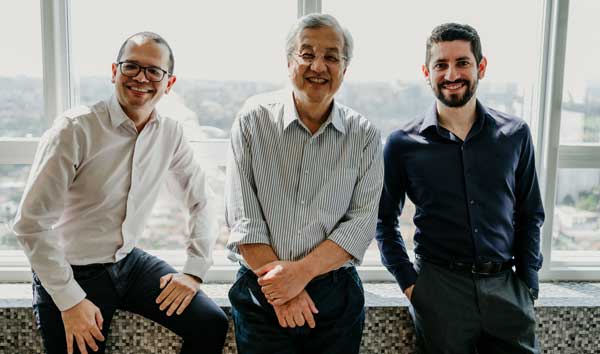
In the photo: Moacir Vieira (Director)/ George Hiraiwa (Managing Partner)/ Eder Manchebo (Managing Partner).
Generation Z
Finally, Generation Z was born into a world of advanced technology and has never known a world without the internet, Windows, and iOS. These young people are searching for work that aligns with their life purpose.
How does this dynamic work in organizational culture?
With all of this happening at the same time, it's clear that these are very different life stages, needs, and expectations between generations. The challenge is how to provide a corporate environment that meets the desires and maximizes the potential of each individual.
Paradigm shift
The first point that needs to be addressed is the company's need to break paradigms.
Who said that older people don't know how to use computers? On the contrary, they are very connected and quickly adapt to new realities. We must remember that they were born or lived through the Cold War period and experienced serious economic crises, and because of all this, they acquired a high sense of adaptability.
While Generations Y and Z face the prejudice of not being committed, the startups and unicorns in the market led by these generations are there to prove otherwise.
A good example is right here at Grupo Value: Éder achieved partnership in the company at only 25 years old! Fortunately, these people are good at what they do, highly engaged and responsible, and are building legacies from a young age.
>> Access also: How to attract investors, according to the country's largest investment funds.
Rethinking the motivators
With stereotypes set aside, it is crucial for company leaders to understand the motivators of different generations and, based on this, build a corporate environment and business culture that meets diverse needs and expectations.
Some practical examples include career plans, compensation policies, and training programs. These well-defined and clear items are important for Generation X and Y. Furthermore, defining the company's purpose and mission, which are coherent and intrinsic to the organization's day-to-day actions, helps retain and engage Generation Z.
The freedom to actively participate in the company's challenges and the feeling of being heard and useful leads Baby Boomers to wholeheartedly dedicate themselves to offering all their life experience as learning opportunities for the team.

In other words, this reality of having multiple generations working together is a valuable asset to be explored. Companies that know how to manage this diversity will benefit from a high-performing, harmonious team with complementary skills. For all of this to happen, respect and understanding of the motivations of each generation are fundamental for a healthy environment where everyone can deliver their best.
How is it going at your company? Are all four generations present, or are there still only three? Tell us about it!


